
The fastest way to promote your music as an independent artist is to build a simple, repeatable system: get your release materials ready, pitch it to the right people, show up where listeners already hang out, and track what’s working. Plan on a few weeks of steady effort per release. The only real prerequisite is a finished track you’re proud of. You don’t need a label or a big budget to get started.
Why does it work? Because indie fans discover music through people and places they trust. A playlist curator who loves your sound, a local blog that covers your scene, a college radio host who spins Canadian tracks. One genuine connection does more than a hundred random posts shouted into the void.
If you’ve been uploading songs and hoping for the best, you’re not alone. Most emerging artists start there. The good news is that small, focused moves add up quickly, and plenty of people in the Canadian scene are happy to lend a hand.
In this guide, we’ll walk through the tools you’ll need, a few stop signs to watch for so you don’t waste time or money, and a step-by-step plan you can follow right away. You’ll also find ways to check that your efforts are paying off, plus resources and community connections across Canada, including ways to volunteer or intern if you want to see the industry from the inside. Ready to get your music heard? Let’s get into it.
What You’ll Need Before You Start Promoting (Your Indie Promo Toolkit)
Your Story Comes First: Bio, Photos, and Press Kit
Before anyone hears a single note, they want to know who’s behind it. That’s why your story is the best promo tool you’ve got, and it costs nothing.
Start with a bio of three or four warm, honest sentences. Where are you from? What got you writing songs? What does this release mean to you? Something like “I wrote this one in my parents’ basement in Sudbury after a long winter shift” sticks in people’s minds far better than a list of genres and adjectives. Skip the big claims and write the way you’d talk to a friend at a show.
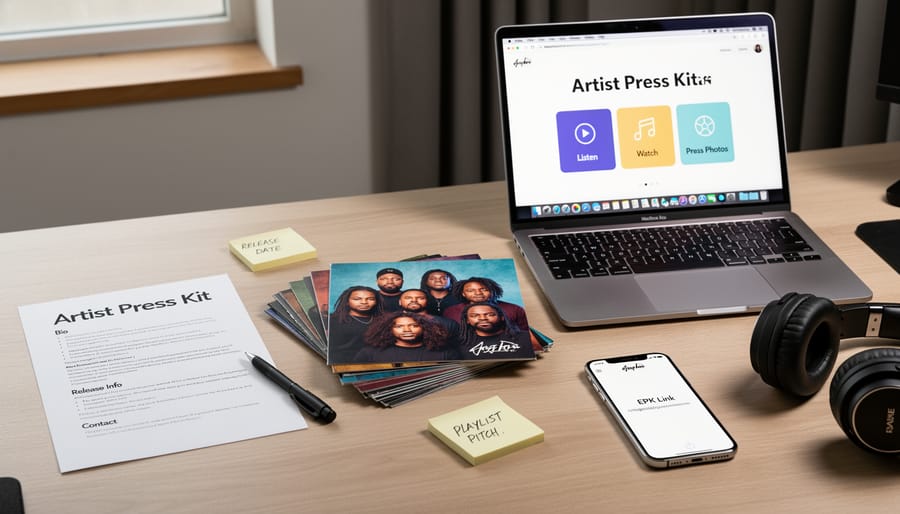
That same personal angle powers your one-page EPK (electronic press kit). Think of it as a friendly handshake in document form: a short bio, a photo, your best link, and one line about why this song exists. Keep it to a single page so busy radio hosts and bloggers can scan it in under a minute.
Here’s a simple checklist of what to have ready:
- A finished, properly mastered track
- A short artist bio in your own voice
- A couple of clear press photos
- Cover art that looks great as a tiny thumbnail
- A simple one-sheet or EPK
- Streaming and social links, all in one place
- A basic email list sign-up
- A free-to-low-cost tool stack: a link-in-bio page, a scheduling app, and a distribution service
You don’t need a pro studio shoot or a designer on retainer. Natural-light photos on a decent phone work fine if they feel like you. Once these pieces are in place, every pitch you send gets easier, because your story is already told and ready to share.
Free and Low-Cost Tools Worth Using
You don’t need a full toolbox to start promoting your music. A handful of free or cheap tools can cover almost everything, so pick a few and grow from there.
Distribution platforms get your songs onto Spotify, Apple Music, and other streaming services. Some charge a small yearly fee, others take a cut, so compare the terms before you commit.
A link page is one tidy web address that points to all your music, socials, and tickets. Free versions work great and save you from changing your bio every release.
An email newsletter is the quiet hero of indie promotion. Social algorithms come and go, but an inbox belongs to you. Start with a simple sign-up form and a short note once a month.
A scheduling app lets you batch your posts in one sitting, then get back to making music. Many have a free tier that’s plenty for a solo artist.
Simple design tools make cover art, gig posters, and story graphics look polished without hiring a designer. Stick to one or two fonts and a few colours so everything feels like you.
Listening gear is worth a thought too. When you’re checking your mixes or scouting other artists to collaborate with, a good pair of sound isolating headphones helps you catch the details. If you’re curious about in-ear options, this guide to IEM noise cancelling is a friendly place to begin.
Start small, use what you have, and add a tool only when you feel the need.
Promo Pitfalls to Avoid (Keeping Your Music and Your Reputation Safe)
Before you hit send on any pitch or sign anything, let’s cover a few heads-ups. Nobody wants a great song to get tangled in a bad deal, so think of this as friendly guardrails, not a list of reasons to be scared.
Start with the shortcuts. Paying for streams, followers, or guaranteed playlist spots can look tempting, especially when your numbers feel small. But streaming platforms are good at spotting artificial plays, and tracks tied to them can get pulled or flagged. Fake numbers also don’t bring real listeners, so the people who might actually love your music never show up. Slow and genuine beats fast and hollow every time.
Next up, pay-to-play offers. You’ll run into plenty of “opportunities” that ask for a fee up front and promise exposure in return. Some are perfectly fair, like entering a festival application or booking a legitimate service. Others are vague about what you’re getting. If you can’t find clear details or real artists who’ve had a good experience, that’s your sign to slow down.
Contracts deserve a slow, careful read too. Before you sign anything, make sure you understand who owns your masters, who owns your publishing, how long the agreement lasts, and how you get paid. If a clause feels unclear, ask questions or get another set of eyes on it. A local music association, a community mentor, or a lawyer who works with artists can help you spot the tricky bits. Giving away rights you didn’t mean to is much harder to undo than it is to avoid.
Another one that trips people up is sharing unreleased music too soon. Posting a rough demo or full unreleased track publicly can make it harder to control how it’s used. Consider getting your song registered with the right organizations first, and keep a dated record of your work, like your session files or a timestamped draft. Teasers and short snippets are a great way to build excitement without handing over the whole song.
Finally, take care of yourself. Posting every day, answering every message, and chasing every trend is a fast track to burnout, and tired artists make less music. Pick a rhythm you can keep up alongside your real life, whether that’s a few posts a week or one good update every few days. Taking a breather isn’t falling behind. It’s how you stay in this for the long haul.
Step-by-Step: Building a Promo Plan That Fits Your Life
Find Your People: Pitching to Indie Radio, Blogs, and Playlists
Pitching feels scary, but it’s really just starting a friendly conversation with someone who loves music. The trick is to research first and write second.
Start by listening. Spend a week with the stations, blogs, and playlist curators you’re eyeing. What do they play? Who do they feature? If your sound fits, great. If it doesn’t, move on, because a thoughtful pitch to ten right-fit people beats a copy-paste blast to a hundred. Keep an eye on what’s dropping in the indie world so you can see where your track might belong.
Community and campus radio are welcoming places to start, since they exist to spotlight local voices. Indie platforms in the spirit of Constantines, which champion upcoming Canadian artists, are worth getting to know too. Check each outlet’s own site for how they like to receive music, since every one does things a little differently.
A good pitch email is short and warm. Here’s a simple way to build one:
- Use a clear subject line with your name, the song title, and one hook.
- Greet the person by name and mention something specific you like about their show or site.
- Share one or two sentences about you and the track, including a standout detail, like where it was written or what inspired it.
- Drop in a streaming link so they can listen with one click.
- Say thanks and sign off with your contact info.
Skip the attachments and the long life story. Busy folks want to press play, not scroll.
If you don’t hear back, a polite nudge after a couple of weeks is totally fine. And whether the answer is yes, no, or silence, a quick thank-you goes a long way. Indie communities are small, and people remember kindness.
Show Up in Person: Local Gigs, Open Mics, and Collabs

Nothing beats the moment someone in the crowd goes from “who’s this?” to “I need to hear that again.” Live shows give you that, and a streaming link never will. Even a tiny room can turn into your first handful of real fans.
Open mics are the friendliest place to start. You get a short set, a supportive crowd, and a chance to test songs before anyone has heard them on a playlist. If you’re thinking about trying a cover to warm up a new audience, a bit of cover inspiration can help you find a stripped-down take that still sounds like you.
Here’s the part that surprises people: showing up for other artists is some of the best promotion you can do. Go to their shows, stay for the whole bill, clap loudly, and say hello afterwards. Goodwill travels fast in a local scene, and the artists you support are usually the first to remember you when a slot opens up.
When you’re ready to ask for a gig, keep it short and kind:
– Mention a show of theirs you actually enjoyed.
– Say who you are in one sentence and include a streaming link.
– Suggest a specific kind of slot, like an opener or a shared bill.
– Thank them whatever the answer is, and follow up politely once if you don’t hear back.
Collabs are the other secret ingredient. Swap a verse, share a bill, or trade opening spots with someone whose sound sits close to yours. You both reach each other’s listeners, and it’s a lot more fun than going it alone.
Keep the Conversation Going on Social Media
Social media works best when it feels like a conversation with friends, not a performance. You don’t need to post daily or jump on every trend. Pick one or two platforms where you actually enjoy hanging out, and show up there regularly.
Share the behind-the-scenes stuff. A voice memo of a half-finished melody, a photo of your messy notebook, a quick clip of rehearsal that went sideways. People love following a journey, and these small moments give them a reason to care about the finished song when it lands.
Tell the stories behind your music, too. Where did that chorus come from? What was happening when you wrote it? A short, honest caption beats a polished ad every time.
Celebrate the little wins out loud. Your first local radio spin, a great open mic, a kind message from a listener: all of it counts. Fans enjoy cheering you on when you let them in on the good news.
Keep it two-way. Reply to comments, answer questions, and share other artists’ work. If a track by a fellow indie act has been on repeat for you, say so, or start a playlist of favourites and tag the people on it. That kind of generosity builds goodwill, and goodwill travels further than any algorithm.
A simple rhythm helps: three or four posts a week, planned in a scheduling app in one relaxed sitting. When you skip a week, don’t sweat it. Real connection is built over months, not by chasing follower counts.
Tapping Into Canada’s Indie Support Network
Spotlight: Why Canadian Indie Communities Lift Each Other Up
Ask around any indie scene in Canada, from a corner pub in a small town to a packed room in a big city, and you’ll hear the same thing: people here show up for each other. It’s one of the best-kept secrets of making music in this country.
Picture how it usually goes. One band lands a slot at a local venue and asks a friend’s group to share the bill. That friend brings their own crowd, and suddenly two sets of fans are discovering new favourites in the same night. Later, someone posts a photo from the show, tags the other artists, and the whole thing ripples outward.
That’s cross-promotion at its simplest, and it costs nothing but a little generosity. Artists swap shoutouts, lend gear, pass along venue contacts, and tell their own listeners, “You’ve got to hear this.” Word-of-mouth still carries a lot of weight, and it tends to come from people who’ve been in your shoes.
The takeaway? You don’t have to do this alone. Be the artist who cheers for others, and you’ll find the favour comes back around.
Have your own story about a scene that welcomed you in? We’d love to hear it. And if you’ve got a track ready, send it our way and submit your music to Constantines so more listeners can find you.
How to Tell If Your Promotion Is Working (and What to Do Next)
Signs You’re on the Right Track
Progress in indie promo rarely arrives with a bang. It shows up in small, quiet signals, and the trick is knowing what to look for. Grab a basic notebook or a simple spreadsheet and jot down a few numbers once a week. Keep it light: monthly listeners, saves on your latest track, email sign-ups, how many people showed up at your last gig, and any real messages from fans or radio folks.
That last one matters more than you’d think. A kind note from a stranger who says your song got them through a rough week is worth ten vanity metrics.
Look for gentle upward trends, not overnight spikes. If your saves and sign-ups creep up month over month, you’re on the right track.
If the numbers stay flat, don’t panic. Try changing one thing at a time: a fresh photo, a new pitch angle, a different gig crowd. Then check back in a few weeks.
How long before I see results?
Often a few months of steady effort before the patterns show up, so be patient with yourself. Small wins along the way count.
Do I need a label or manager to get started?
Nope. Plenty of artists build a following on their own first, and that groundwork makes you more attractive to a team later.
What if nobody responds to my pitches?
That’s really common, so don’t take it personally. Try a shorter email, a more personal detail, and a polite follow-up after a couple of weeks.
Whatever you see in your notebook, celebrate the small stuff. Every new listener is a real person who chose your song.
Your Next Moves: Keep Growing Your Community
Once you’ve got a few small wins, the best thing you can do is keep the momentum going without rushing. Start by planning your next release. It doesn’t have to be a full album. A single, a live session video, or an acoustic version of a track your fans already love can keep people tuned in while you work on bigger ideas.
Next, look into local festivals and showcases. Many smaller community events welcome new artists, and applying is often as simple as sending a short bio and a streaming link. Check each festival’s official page for current details, and don’t be discouraged if the first answer is “not this year.” Plenty of artists try a few times before landing a spot.
Then there’s the behind-the-scenes side of the scene. Volunteering at a local show, helping at a campus radio station, or pitching in at a community music event puts you in the same room as promoters, sound techs, and fellow artists. Those friendly chats often turn into shared bills and fresh ideas. If you’re curious about how the business really works, an internship can teach you the ropes from the inside, from booking to music coverage.
You don’t need to do everything at once. Pick one next move this month, and let the community help carry you from there.
Promoting your music doesn’t have to be a sprint, and it definitely doesn’t have to be a solo mission. The artists who stick around in Canada’s indie scene usually aren’t the loudest ones. They’re the ones who stayed patient, showed up as themselves, and kept building real connections, one show, one message, one shared bill at a time.
So here’s the heart of it: be patient with the process, be genuine in how you tell your story, and be connected to the people around you. Get your basics ready, share your music where the right listeners hang out, and lean on the community that’s already cheering for new voices. Small wins add up faster than you’d think.
You don’t have to figure this out alone. Keep an eye on concert news to catch what’s happening in the scene and find your next show to attend or play. When your music feels ready, submit it and let us hear what you’ve been working on. And if you’d like to learn the business from the inside, consider volunteering or interning with Constantines. Whatever stage you’re at, you belong in this community, and we’re glad you’re here.