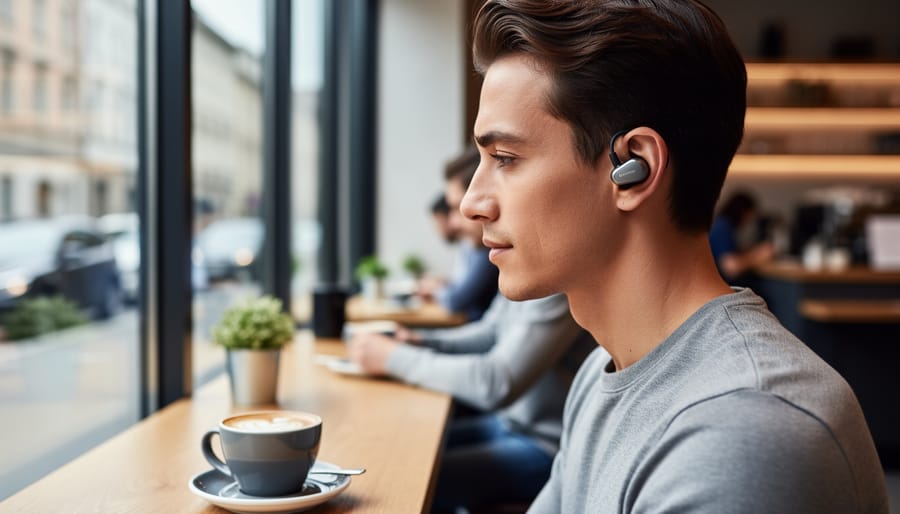
The best IEMs with active noise cancelling for indie music in 2026 deliver the clarity and intimacy indie tracks demand while letting you enjoy them anywhere, from noisy commutes to crowded coffee shops. Unlike over-ear headphones, these in-ear monitors stay compact and comfortable for hours, making them perfect for listeners who want studio-grade detail without the bulk.
Here’s what matters most: look for hybrid driver designs that preserve the textural details in vocals and acoustic guitars, ANC that blocks low-frequency rumble without crushing the midrange warmth indie music lives on, and a fit secure enough that passive isolation does half the work before electronics even kick in. Budget around $150 to $400 for solid performance, with sweet spots emerging in the $200-$250 range where brands like 1More and Technics offer surprisingly capable options.
The challenge with IEMs and noise cancelling isn’t just the tech fitting into a tiny shell. It’s finding pairs that don’t sacrifice the organic, unpolished character that makes indie music feel personal. Many ANC earbuds tune aggressively for mainstream pop and hip-hop, scooping mids and boosting bass until a Phoebe Bridgers track sounds like it’s being played through a tunnel. You need something more honest.
This guide walks you through the technical considerations without the jargon overload, breaks down what to prioritize at different price points, and helps you avoid the common traps that leave buyers disappointed. If you’re still weighing whether full isolation matters more than active cancellation, our sound isolating guide offers another perspective worth exploring. Let’s find the pair that brings your favorite records to life, wherever you happen to be listening.
Why IEMs Matter for Indie Music Listening
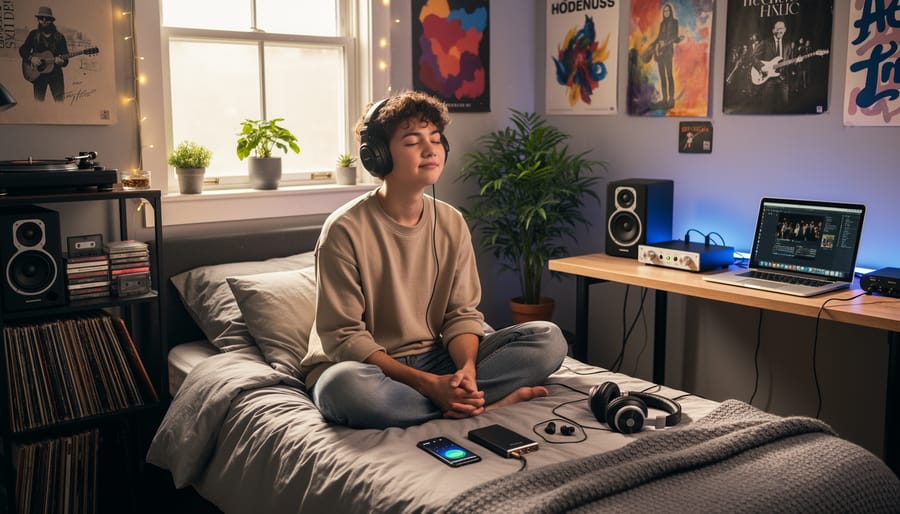
In-ear monitors sit right at the threshold of your ear canal, placing drivers millimeters from your eardrum, a proximity that fundamentally changes how you hear music. Unlike over-ear headphones that create a soundstage around your head, IEMs deliver sound directly into your ears with minimal air travel between driver and eardrum. This closeness means you catch every breath between lyrics, every finger slide on guitar strings, every subtle reverb tail that bedroom producers layer into their tracks at 2 AM.
For indie music, where production choices often favor intimacy over bombast, this direct delivery matters. Think about the whispered vocals in Elliott Smith recordings, the tape hiss in early Bright Eyes albums, or the delicate harmonics in Sufjan Stevens’ banjo work. IEMs excel at revealing these textural details because they don’t need to push sound across the distance that over-ear cups create. You hear the music as if the artist recorded it inches from your face, which, in many indie contexts, they essentially did.
The portability factor can’t be overstated either. Over-ear headphones demand space in your bag and often feel precious, like equipment rather than daily companions. IEMs slip into a pocket. You can bring them to coffee shops, on the bus, to campus libraries, all the places where indie music fans actually spend their listening time. They become part of your routine rather than something you plan around.
This intimacy creates a different relationship with your music library. When you’re listening to Phoebe Bridgers or Bon Iver through IEMs, you’re not analyzing from a distance. You’re inside the recording, hearing production choices as intentional creative decisions rather than background elements. That quiet drum brush in the third verse? The slightly off-pitch harmony vocal? These aren’t flaws, they’re the human fingerprints that make indie music feel like a conversation rather than a performance.
What to Look for When Choosing IEM Noise Cancelling Headphones
Choosing the right IEM noise cancelling headphones means balancing several factors that work together to create your ideal listening experience. Here’s what actually matters when you’re shopping, and why each consideration plays a role in how you’ll hear your favorite indie tracks.
Sound Signature
This is where personal taste meets music genre. A balanced sound signature gives you equal attention across lows, mids, and highs, perfect for indie folk and singer-songwriter material where vocal clarity and acoustic instrument detail matter most. Bass-heavy signatures pump up the low end, which works well for indie rock and electronic-leaning tracks but can muddy the midrange where most indie vocals live. For the textured layers in bands like Alvvays or the subtle production choices in Phoebe Bridgers’ work, a slightly warm but balanced signature usually hits the sweet spot.
ANC Technology
Not all noise cancelling works the same way in IEMs. Hybrid ANC uses both internal and external microphones to cancel noise more effectively across different frequencies, great for commutes and coffee shop listening where you want to block low rumbles and mid-range chatter. Feedforward ANC (external mic only) tends to be simpler and cheaper but less effective at complex noise patterns. Remember that IEMs already provide passive isolation through their physical seal, so you don’t need studio-level ANC to enjoy your music in most environments. Check out our guide on isolation tips for more on how passive and active approaches compare.
Driver Configuration
Dynamic drivers deliver punchy bass and natural timbre, they’re the most common and affordable option. Balanced armature drivers excel at detail and clarity in the mids and highs, which makes them brilliant for revealing the production nuances in indie recordings. Hybrid setups combine both types to cover the full frequency range with precision, though they cost more. For indie music’s varied production styles, dynamic or hybrid configurations typically serve you better than pure balanced armature.
Comfort and Fit
No amount of amazing sound matters if your IEMs hurt after twenty minutes. Ear tip variety is crucial, silicone tips offer durability and easy cleaning, while foam tips provide better passive isolation and often a more comfortable seal. Different ear canal shapes need different tip sizes and materials, so look for brands that include multiple options in the box. A proper seal not only improves comfort but also maximizes bass response and ANC effectiveness.
Here’s your quick-reference checklist for evaluating any IEM:
- Sound signature that matches your preferred indie subgenres
- ANC type appropriate for your main listening environments
- Driver configuration that balances detail and warmth
- Multiple ear tip sizes and materials included
- Battery life of 6+ hours for realistic use
- Codec support (AAC minimum, aptX or LDAC for hi-res streaming)
- Price tier aligned with how often you’ll use them
Battery and Connectivity
For wireless IEMs, aim for at least six hours of playback with ANC on, enough for a full day of casual listening. Quick charging helps when you forget to plug in overnight. Codec support affects streaming quality: AAC works fine for Apple Music or Spotify Premium, but if you stream hi-res or use Android, look for aptX or LDAC compatibility to preserve the detail in well-produced indie albums.
Budget Reality
Entry-level IEMs under $100 get you started with basic ANC and decent sound. The $100-250 range is where performance jumps significantly, better drivers, more effective noise cancelling, and improved build quality. Above $250, you’re paying for audiophile-grade components and refinement that serious listeners will appreciate but casual fans might not need. Be honest about your listening habits and how much improvement you’ll actually notice.
Types of IEM Noise Cancelling Technology Compared
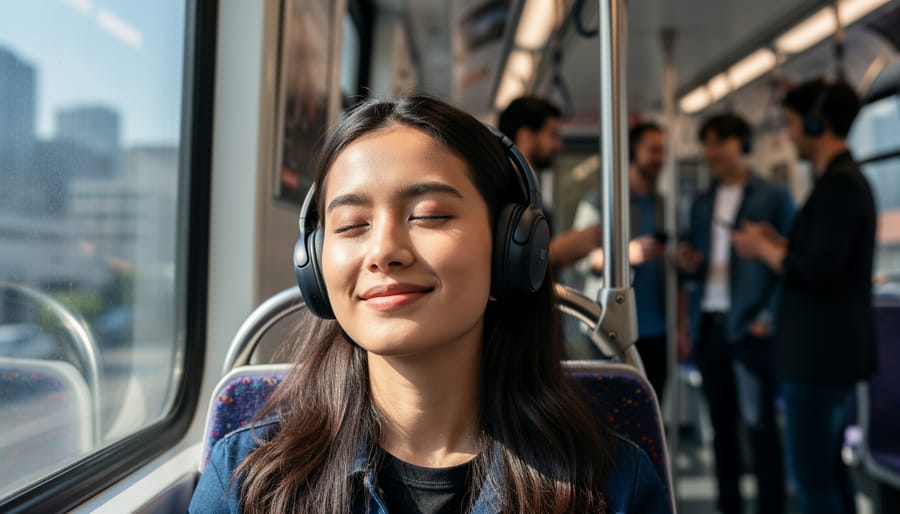
Understanding how noise cancellation works in IEMs helps you match the technology to your listening habits. Each approach has different strengths depending on where and how you listen to your favourite indie records.
Passive noise isolation is the simplest method. Your ear tips create a physical seal that blocks outside sound, much like earplugs. No electronics involved, which means no battery drain and no impact on audio quality. Foam tips generally isolate better than silicone, making them excellent for quiet listening environments or when you want zero electronic interference with your music. The trade-off? You’re relying entirely on fit, and low-frequency rumble (like bus engines) can still seep through.
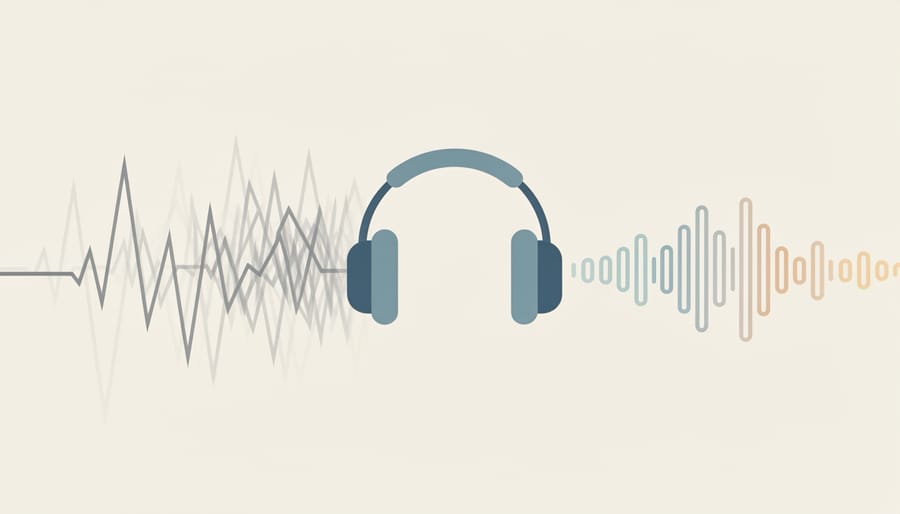
Active noise cancelling adds microphones and processing. The IEMs detect external sound waves and generate opposite sound waves to cancel them out. This works brilliantly for consistent low-frequency noise, airplane hum, train rumble, air conditioning. Feedforward ANC places microphones on the outside of the earpiece and handles a broader range of frequencies. Feedback ANC uses internal microphones for more precise cancellation but in a narrower range. For commuters streaming indie playlists, this technology transforms noisy environments into private listening spaces.
Hybrid systems combine both feedforward and feedback microphones, giving you wider frequency coverage and more effective cancellation across different noise types. You’ll hear the textural details in a Phoebe Bridgers track even in a crowded coffee shop. The downside is higher cost and slightly more battery consumption.
Adaptive ANC takes things further by automatically adjusting cancellation strength based on your environment. Walk from a quiet library into a busy street, and the system responds without you touching a control. Premium IEMs often include this feature, and it’s genuinely useful if you move between spaces frequently during your listening sessions.
| ANC Type | How It Works | Best Listening Scenarios | Typical Price Range |
|---|---|---|---|
| Passive Isolation | Physical seal blocks sound | Quiet spaces, critical listening | All price points |
| Active ANC (Feedforward/Feedback) | Microphones generate inverse sound waves | Commuting, consistent background noise | $80-$200 |
| Hybrid ANC | Combined internal and external mics | Mixed environments, coffee shops | $150-$300 |
| Adaptive ANC | Auto-adjusts to environment changes | Frequent location changes, all-day wear | $200+ |
Most music enthusiasts find that combining good passive isolation with moderate ANC delivers the sweet spot. You preserve the natural sound signature that makes indie music special while still creating enough separation from the outside world to catch every reverb tail and whispered vocal. Maxing out ANC can sometimes introduce a slight pressure sensation or subtle hiss, so consider how much cancellation you actually need rather than chasing the highest specs on paper.
Finding the Right Fit and Sound Profile for Your Ears
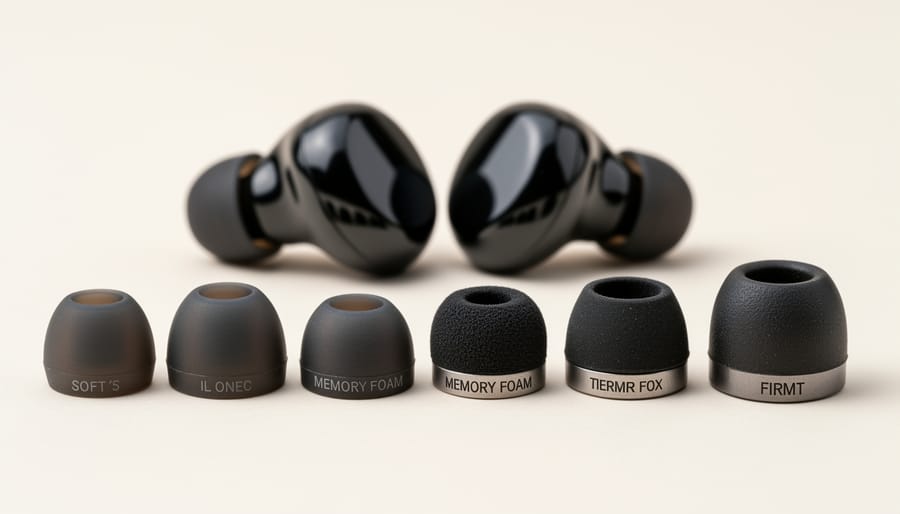
The seal between your IEM tip and ear canal makes or breaks your listening experience, affecting everything from bass response to ANC effectiveness. A poor fit means sound leaks out and ambient noise leaks in, no matter how advanced the technology inside. That’s why you’ll often receive multiple tip sizes in the box, your ear canals are unique, and fit matters as much as the drivers themselves.
Start with silicone tips if you want durability and easy cleaning. They maintain their shape, slide in smoothly, and work well for shorter sessions. Foam tips compress before insertion and then expand to fill your ear canal, creating superior isolation and a warmer sound signature that some indie listeners prefer for acoustic tracks. The trade-off: foam wears out faster and needs regular replacement. Hybrid tips attempt to split the difference, combining a foam core with a silicone outer layer.
Your ear canal shape dictates which tip style works best. Some canals are wider at the opening, others deeper inside. Test each size by inserting the IEM gently and rotating slightly, you should feel light pressure without pain. Pull the tip out partway and let it settle naturally rather than forcing it. If you hear tinny, bass-light sound, try a larger size. If your ears ache after twenty minutes, go smaller or switch materials.
For marathon listening sessions common among music enthusiasts, comfort trumps everything. Walk around with them in for fifteen minutes before committing. Notice whether they shift when you talk or chew. The right fit disappears, you forget you’re wearing them, which is exactly what hours spent with your indie playlists demand.
IEM Recommendations by Budget and Listening Style
Entry-Level Options (Under $100)
Budget IEMs with active noise cancelling typically offer 15-20dB of noise reduction, enough to dampen bus engines and coffee shop chatter but not complete silence. You’ll find single dynamic drivers that handle indie music’s midrange vocals and acoustic guitars well, though bass response may feel thinner than premium options. The sweet spot lies in models using hybrid passive isolation plus basic feedforward ANC rather than trying to compete on technology alone.
Acceptable compromises at this price include shorter battery life (4-6 hours), Bluetooth 5.0 instead of 5.3, and plastic housings that feel less luxurious. What matters more: secure fit with multiple tip sizes included and a balanced sound signature that doesn’t muddy vocals. Skip models advertising “studio quality” or excessive bass boost, they rarely deliver for indie’s textural details.
Look for brands with strong warranty support and user reviews mentioning comfort during hour-long sessions. Your money goes furthest when you prioritize fit and passive isolation fundamentals over aggressive ANC marketing claims.
Mid-Range Sweet Spot ($100-$250)
The $100-250 bracket is where IEMs start delivering genuinely impressive sound quality alongside effective noise cancellation, not just acceptable compromises. You’re getting hybrid driver configurations that handle indie music’s layered textures beautifully: balanced armatures for crisp vocals and shimmering cymbals, paired with dynamic drivers that give bass guitar and kick drums real presence without overwhelming delicate arrangements.
ANC at this level works noticeably better than budget models. Hybrid systems reduce ambient noise by 25-30dB in typical conditions, making subway commutes or noisy cafés disappear while preserving the spatial qualities that make shoegaze and dream pop immersive. You’ll also find adaptive ANC that adjusts to your environment automatically, useful when moving between quiet practice spaces and busy streets.
Build quality improves significantly here. Premium resin shells resist sweat and last through years of daily use, while detachable cables mean you’re not throwing away the entire IEM when a wire fails. Comfort matters for three-hour listening sessions: memory foam tips that actually maintain their seal, lighter housings, and better weight distribution all reduce fatigue.
Most music enthusiasts find this range hits the sweet spot, enough fidelity to hear what producers intended without requiring audiophile equipment to drive them properly.
Premium Territory ($250+)
In this price range, you’re stepping into audiophile territory where every element is engineered for discerning ears. Premium IEMs feature multi-driver configurations, often combining balanced armatures for crisp highs and dynamic drivers for natural bass response, that reveal the layered production techniques indie artists obsess over. You’ll hear the room ambience in Elliott Smith recordings, the harmonica breath in Sufjan Stevens tracks, and the texture differences between synthesized and organic instruments in Phoebe Bridgers’ arrangements.
The ANC systems here use sophisticated hybrid designs with multiple microphones, adapting in real-time to your environment without compressing the music’s dynamic range. Premium materials like machined aluminum housings and medical-grade silicone tips ensure durability and comfort during marathon listening sessions.
For serious indie music fans who’ve outgrown streaming compression and want to hear what artists intended, this investment transforms familiar albums into new experiences. The difference isn’t subtle, it’s the gap between hearing music and feeling it.
Common Mistakes to Avoid When Buying IEM Noise Cancelling Headphones
Even enthusiasts who’ve done their homework can stumble into traps that waste money or lead to disappointing listening sessions. Here are the pitfalls to watch for when shopping for IEM noise cancelling headphones.
The biggest mistake is chasing specs and features while ignoring how the IEMs actually fit your ears. An impressive driver configuration and advanced ANC mean nothing if the earpieces don’t seal properly or cause discomfort after twenty minutes. Fit affects everything, sound quality, noise isolation, and whether you’ll actually want to use them. Always prioritize ergonomics and tip compatibility over flashy feature lists.
Many buyers expect IEM active noise cancelling to perform like over-ear headphones, then feel let down when it doesn’t completely silence a noisy subway. IEMs rely more heavily on passive isolation from the seal in your ear canal. Their ANC handles steady low-frequency rumble well but won’t eliminate all ambient noise. Set realistic expectations about what these smaller form factors can achieve.
Overlooking codec support is another common error, especially for wireless models. If you stream most of your indie music through Spotify or Apple Music, you want aptX, AAC, or LDAC support to preserve the detail and dynamics. Basic SBC compression flattens the soundstage and dulls the textures that make indie production interesting.
Brand hype can also steer you wrong. A company known for bass-heavy consumer headphones might not deliver the balanced, nuanced sound profile indie music demands. Read reviews from actual users in music communities, not just marketing materials.
Finally, consider your actual use case. IEMs optimized for commuting with aggressive ANC might color the sound in ways that annoy you during focused home listening. Be honest about where and how you’ll use them most, and choose accordingly. There’s no single perfect pair, just the right match for your ears and habits.
Frequently Asked Questions
Do IEMs sound better than over-ear headphones for indie music? It depends on what you’re chasing. IEMs create a more intimate, direct sound that can reveal the subtle layering in bedroom pop or the textural details in lo-fi production. Over-ear headphones typically offer a wider soundstage, which some listeners prefer for shoegaze or orchestral indie arrangements. For portable listening and commuting, IEMs win for convenience and isolation, but neither is objectively “better”, it’s about matching the gear to how and where you listen.
How much ANC do I actually need for listening to indie music?
If you mainly listen at home in quiet spaces, passive isolation from a good fit might be enough. For commuting, coffee shops, or noisy environments, moderate ANC makes a real difference in preserving those delicate guitar tones and vocal subtleties without cranking the volume to unsafe levels.
Can I use IEMs with noise cancelling for live shows or studio work?
Yes, but check compatibility first. Some musicians use IEMs for stage monitoring, though professional models designed for that purpose often skip ANC in favor of deep passive isolation. For casual studio listening or attending small venue shows, consumer IEMs work fine.
Do wireless IEMs compromise sound quality compared to wired?
Not as much as they used to. Modern Bluetooth codecs like aptX Adaptive and LDAC deliver quality that most listeners can’t distinguish from wired, especially when streaming indie tracks from services like Spotify or Bandcamp. Wired still has the edge for critical listening, but wireless convenience rarely sacrifices the experience.
How do I maintain my IEMs to keep them sounding great?
Clean the ear tips regularly with mild soap and water, check the nozzles for earwax buildup, and store them in their case when not in use. Replace foam tips every few months as they compress, and keep the charging contacts clean on wireless models.
What if the ANC makes me feel uncomfortable or creates pressure in my ears?
Some people experience a sensation of pressure or fullness with active noise cancelling. Try adjusting to the best ANC settings for your environment, or look for models with transparency modes that let you dial down the effect. If discomfort persists, IEMs with strong passive isolation might suit you better.
Another common question: are expensive IEMs worth it for casual listeners? If you spend hours each day with your music and you’ve outgrown budget options, the jump to mid-range territory often delivers noticeable improvements in comfort and sound clarity. Premium models offer diminishing returns unless you’re chasing specific characteristics or have discerning ears trained to catch minute differences. Most indie music fans find their sweet spot in the hundred-to-two-hundred-dollar range, where performance meets practicality without requiring a second mortgage.
Finding the right IEM noise cancelling headphones is about more than just blocking out the world, it’s about creating space for the music that matters to you. Those layered guitar textures in a Snail Mail track, the whispered vocals in a Phoebe Bridgers song, the deliberate lo-fi crackle in a bedroom pop recording, they all deserve headphones that won’t flatten them into background noise.
The best choice isn’t always the most expensive one or the model with the longest feature list. It’s the pair that fits your ears comfortably, matches how you actually listen to music, and delivers the sound signature that makes your favorite indie albums come alive. Whether you’re spending fifty dollars or five hundred, prioritizing comfort and sound quality over marketing promises will serve you far better in the long run.
At Constantines, we believe thoughtful music deserves thoughtful listening. Take your time, try different options if you can, and trust your ears. The indie artists you love put care into every production choice, you owe it to their work, and to yourself, to hear it the way it was meant to be experienced.